
Published March 9, 2026
How Bonds and Uncertain Times Affect Mortgage Rates

Let's start with the basics!
What Are Bonds? A bond is when an investor lends money to the government or a company. In return, the investor gets paid interest over time. Many investors buy U.S. government bonds because they are considered very safe.
What Are Mortgages? A mortgage is a loan for a home. A bank lends the money, and the homeowner pays it back over time with interest.
What are Mortgage-Backed Securities (MBS)? After a bank gives someone a mortgage, the loan is often grouped together with many other mortgages and sold to investors as an investment. These investments are called mortgage-backed securities. Investors who buy them receive payments from homeowners’ monthly mortgage payments.
How are Bonds and Mortgages Connected? Investors who buy them receive payments from homeowners’ monthly mortgage payments. MBSs compete with Bonds for investor money. Because of that, changes in the bond market can influence MBSs and mortgage rates.
How do uncertain times (like war) affect bonds and morgage rates?
When major global events happen- such as war, economic instability, or financial crises- investors often become cautious and move their money into safer investments. This shift can eventually affect mortgage rates.
Let's simplify how this works:
Step 1: Uncertainty Makes Investors Nervous
Events like wars, recessions, or global conflicts make financial markets feel risky. Investors may start selling stocks or other investments that feel uncertain.
Step 2: Investors Move Money Into Safer Assets
Many investors choose to move their money into safer investments like U.S. Treasury bonds.
Step 3: More Demand Raises Bond Prices
When many investors want bonds, demand increases. Just like any market, when demand rises, prices go up.
Step 4: Bond Yields Fall
Bonds pay a fixed amount of interest. If investors pay more to buy a bond, the return they receive becomes smaller. This means when bond prices rise, bond yields fall.
Step 5: Mortgage Bonds Adjust
Investors are always comparing Bonds vs. MBSs.
Mortgage investments are slightly riskier than government bonds, so investors usually expect a little higher return from them. When bond yields fall, investors become more willing to accept lower returns from MBSs as well.
Step 6: Mortgage Rates Can Fall
Mortgage rates are closely tied to the yields investors expect from mortgage-backed securities.
So when MBS yields fall, lenders can offer lower mortgage rates and still sell those loans to investors.
The Simple Chain Reaction
Global uncertainty
↓
Investors seek safety
↓
Money moves into bonds
↓
Bond prices rise
↓
Bond yields fall
↓
Mortgage investment returns fall
↓
Mortgage rates may decrease
Then why are rates fluctuating?!
Mortgage rates are influenced by many factors.
The bond market and global economy plays a major role, and during uncertain times, the movement of investors toward safer assets can help push mortgage rates lower (yay lower rates)!
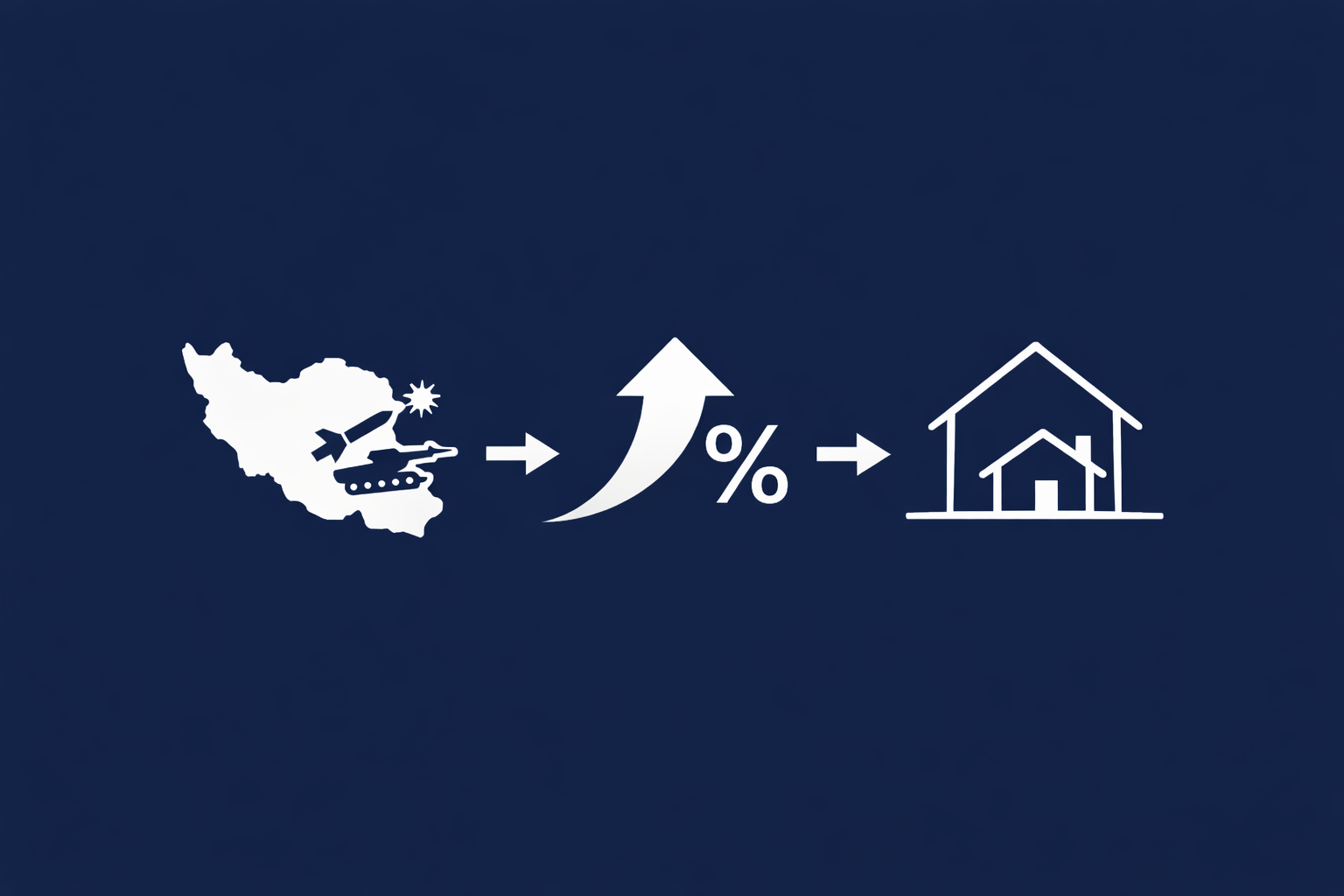
At the same time, geopolitical conflicts can push oil prices higher, leading to inflating and increase in mortgage rates. When investors expect higher inflation, investors demand higher yields on bonds ---> bond yields increase ---> MBSs must offer higher returns ---> Mortgage rates increase (boo).
So why does this matter for homebuyers?
The big picture is that the real estate market will continue to ebb and flow like it always has.
In the Iowa City housing market, inventory remains low and demand for housing continues. Even during times of global uncertainty, people still need places to live, move for jobs, grow their families, and make life changes. The real estate market does not stop - it simply adjusts.
For many buyers, owning a home can provide stability, the ability to build equity over time, and the opportunity to benefit from future market growth. In markets like Iowa, purchasing a home can still be a strong step toward long-term financial security.


or another way